Hard Water + Heat + Evaporation = Calcium Scale. Every Time.
Las Vegas water is hard — full stop. Our municipal supply, largely sourced from Lake Mead and the Colorado River, carries high mineral content by the time it reaches your backyard pool. You're starting with elevated calcium hardness before you've added a single chemical. Then add 110°F summer heat, daily evaporation of on average .5 inch to 1 inch, constant top-offs with more hard water, and months of high UV exposure — and you've built the perfect environment for calcium scale formation.
Every time water evaporates, the calcium, minerals, and dissolved solids stay in the pool and concentrate. Over time, as calcium concentration climbs and LSI trends positive, the water reaches a point where it can no longer hold all its dissolved calcium in solution. Calcium carbonate precipitates out and bonds to whatever surface it contacts. Along the tile line — where the water meets air and evaporation is most active — it hardens into visible white scale that doesn't wipe off.
Even with well-managed chemistry and consistent LSI monitoring, the physics of Las Vegas water still push calcium concentration upward over time. Scale management here is management, not elimination. At some point, tile restoration becomes necessary. The only question is which method you use.
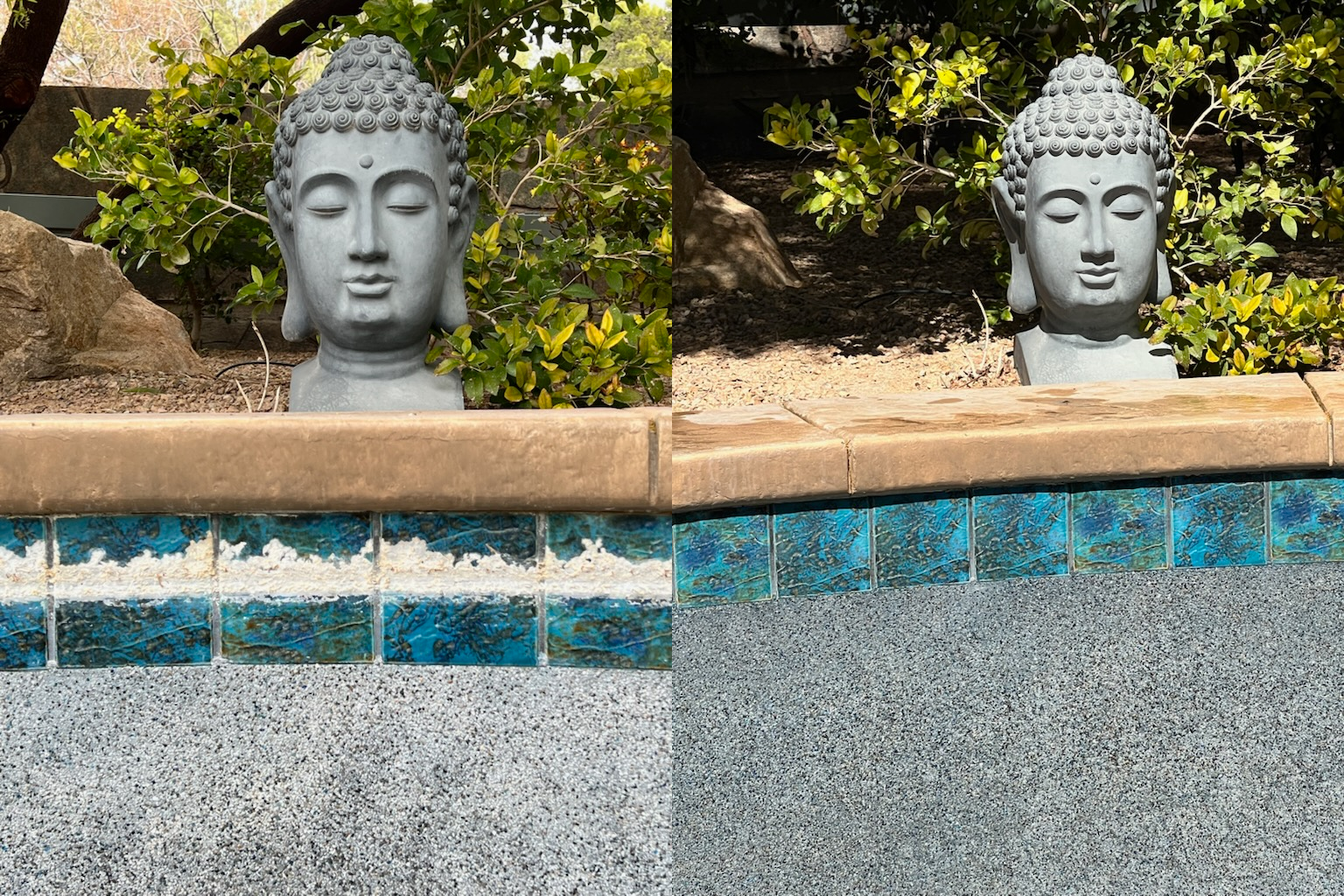
The Methods Compared — From Least to Most Effective
Most homeowners try these in order before calling a professional. Understanding why each falls short on established Las Vegas scale explains why bead blasting is the standard for serious tile restoration in this climate.
Acid Washing the Tile Line
Muriatic acid can dissolve light, early-stage calcium. But it's not selective — once the calcium dissolves, the acid keeps working on grout, plaster, and tile glaze. Heavy scale that's hardened over years resists standard acid concentrations anyway. The result is often partial removal with etching damage to surrounding surfaces.
Pumice Stones
Pumice can work on plaster surfaces with light calcium. On glazed tile, the risk is real: pumice scratches the glaze finish, and a scratched glaze bonds calcium faster on the next cycle — making future scale worse. Once glaze is dulled or scratched, it can't be restored without replacing the tile.
Metal Scrapers
Metal tools against glazed tile leave permanent scratches. You might knock off the surface layer of calcium, but the tool marks underneath stay forever. Once the glaze is scored with metal, you've done more lasting damage than the calcium ever would have.
Chemical Scale Removers
Scale removers can slow early calcium deposits and help with maintenance cleaning. For thick, crusted calcium that's been forming for years in Las Vegas conditions, these products rarely provide complete restoration. They're part of a prevention protocol, not a cure for established heavy scale.
Bead Blasting — Professional Tile Restoration
Mechanically removes calcium without chemical corrosion of surrounding surfaces. Handles buildup that's been forming for 3–7 years. Preserves tile glaze when done with correct technique and media. Produces a complete, same-day restoration. The only method that reliably restores heavily scaled tile to near-original condition.
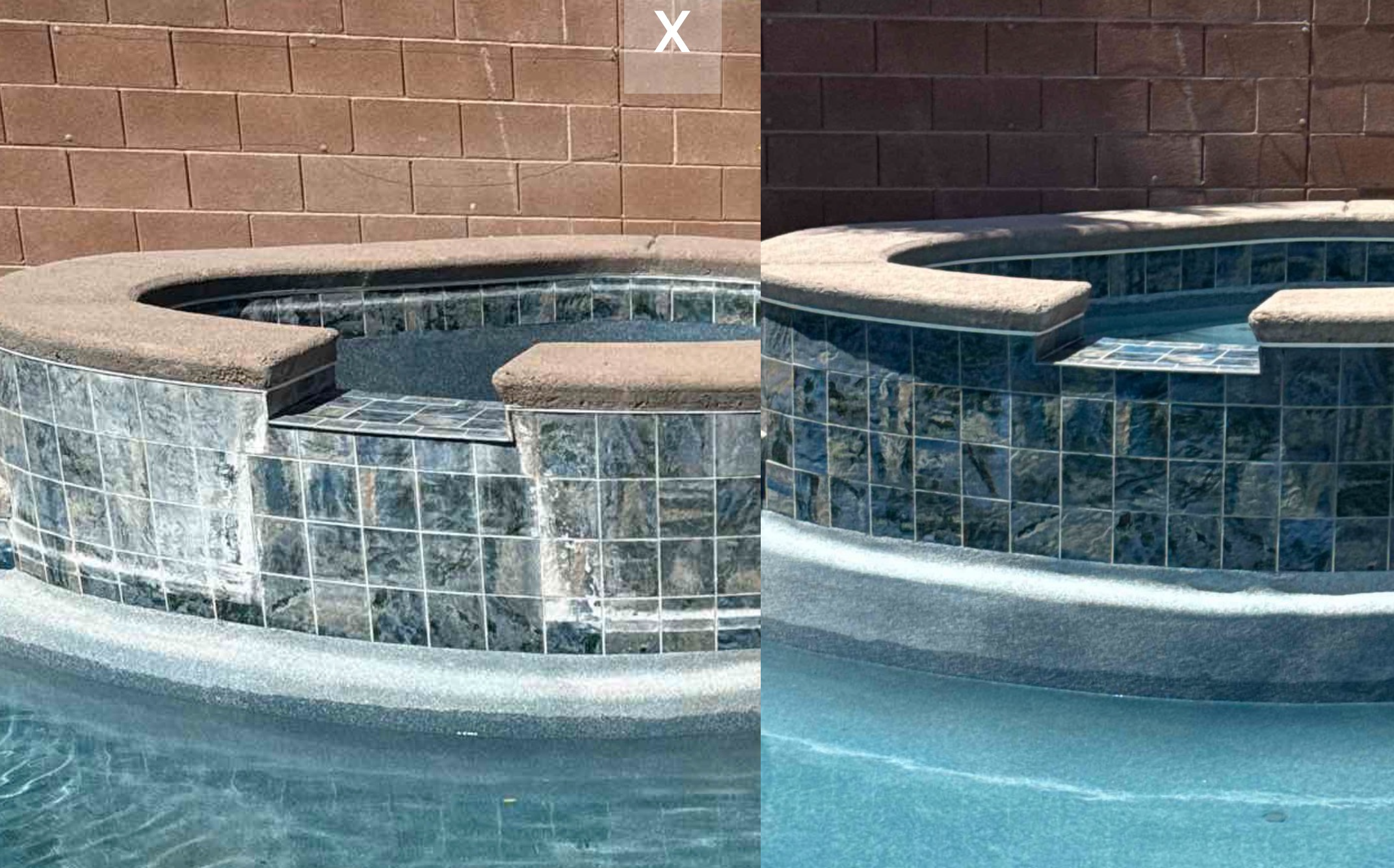
What Bead Blasting Actually Is — and What It Isn't
Bead blasting uses specialized media — typically glass bead or similar purpose-designed material — propelled by compressed air to remove calcium buildup from tile surfaces. It is not sandblasting. That distinction matters significantly for pool tile.
Sandblasting uses aggressive, angular abrasive media that would destroy pool tile glaze. Bead blasting uses smooth, spherical media calibrated for the specific hardness of calcium scale versus the surface being preserved. The beads fracture calcium on impact while leaving the tile glaze intact underneath — precision mechanical cleaning rather than aggressive abrasion. The key word throughout is controlled: media type, air pressure, distance, and technique all determine whether the result is complete restoration or damage.
How a Professional Service Proceeds
Lower the Water Level
Pool water is reduced below the tile line to expose the full scale surface. Surrounding surfaces are assessed for protection needs before work begins.
Protect Adjacent Surfaces
Equipment, decking, and surrounding areas are protected as needed. A professional crew manages overspray proactively — not as an afterthought.
Apply Blasting Media in Controlled Passes
Compressed air drives media across the tile at calibrated pressure. The technician works in methodical passes, adjusting distance and pressure based on scale thickness and tile material.
Inspect and Detail
The restored surface is inspected for completeness. Stubborn spots are addressed individually. Grout lines are checked for integrity and cleaned as needed.
Thorough Cleanup
Blasting media, calcium debris, and protective materials are cleaned from the property. The job is complete when the worksite is clean — not just when the tile is done.
Why Bead Blasting Outperforms Every Other Method
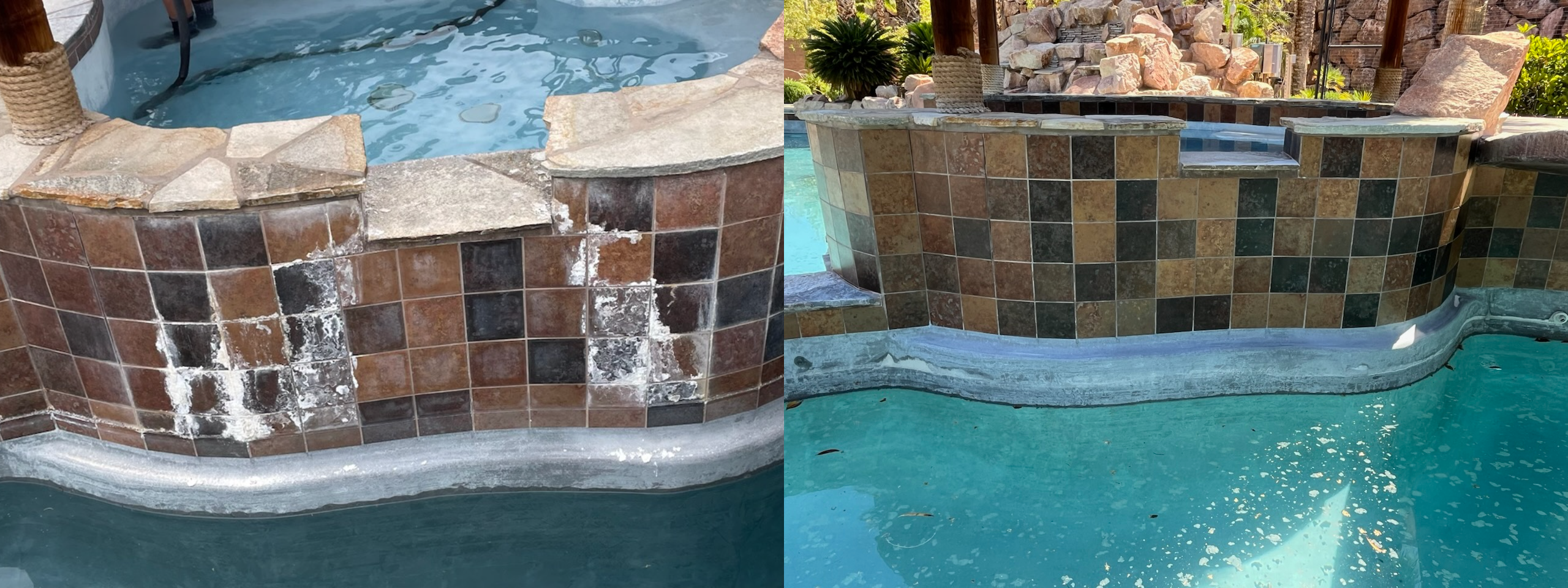
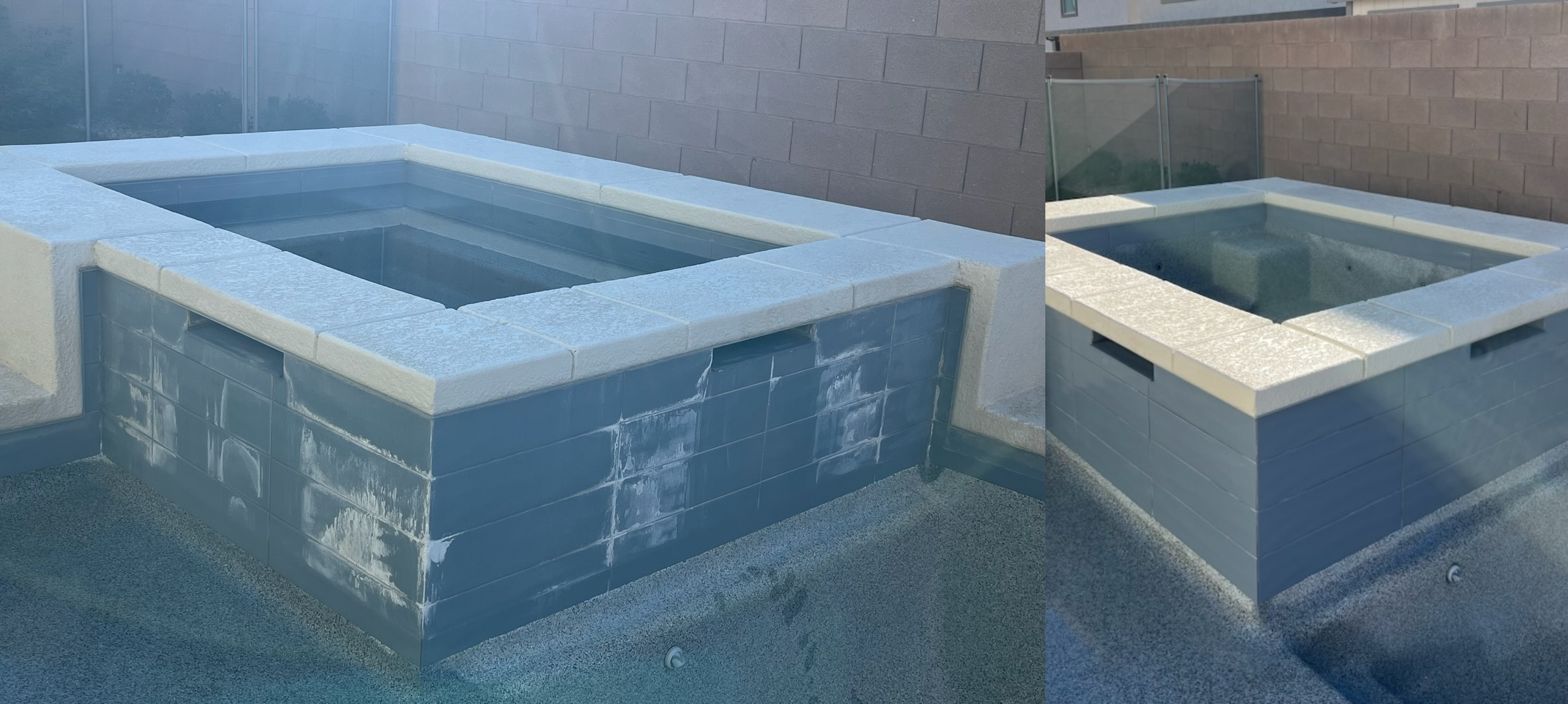
When Is It Time to Schedule Bead Blasting?
In Las Vegas, most pools need tile restoration every 3–5 years depending on water chemistry management and evaporation. Pools with consistently well-managed LSI and lower calcium hardness may push toward the longer end. This isn't a failure of maintenance — it's a consequence of the water we live with.
- Thick white or grey-tan crust along the tile band that doesn't respond to brushing or standard cleaning products
- Rough texture at the waterline where the tile surface has lost its smooth feel
- Tile that appears permanently stained or discolored along the waterline despite clean water
- White calcium that continues building back within weeks or months of using chemical scale removers
- Grout lines that are visibly obscured by heavy mineral deposits
- A weekly service technician identifies the tile as needing restoration beyond what chemistry can address
Why We Recommend Ron & Dorian at Power Play Pool Solutions
There's a difference between contractors who say they do something and specialists who have made it their focus. When our customers need professional tile restoration in the Las Vegas Valley, we confidently send them to one crew: Ron and Dorian at Power Play Pool Solutions.
We don't make this referral lightly. We've seen the results firsthand — tile that looked permanently ruined, scaled to the point where the underlying color was barely visible, restored clean and bright. That kind of result doesn't come from generic technique. It comes from operators who've done this work specifically in Las Vegas water, on Las Vegas tile, with the equipment and skill to control the outcome.
Power Play Pool Solutions
Las Vegas Valley tile restoration specialists. Ron & Dorian bring the equipment investment, local expertise, and professional execution that tile restoration in Southern Nevada actually requires.
- They understand Las Vegas water — not generic advice from a national franchise. Ron & Dorian work in this water, in this heat, on these pools. They know high calcium hardness and the tile materials common to Las Vegas-area construction.
- They use proper media and technique — and have invested in the equipment required to do it correctly. Improper blasting can damage glaze, scar grout, leave an uneven finish, and create overspray problems. Experience determines outcome.
- They control their process and respect the property — every job includes protecting surrounding surfaces as needed and thorough cleanup when the work is done. That professionalism is why we're comfortable sending our customers to them.
- They deliver real restoration — tile that looked permanently ruined comes back clean and bright. With proper chemistry management afterward, it stays that way significantly longer than tile cleaned by inferior methods.
What to Focus On After Bead Blasting
Bead blasting resets the clock. Chemistry determines how long that clean look lasts. The restoration gives you a fresh surface — what happens next depends on how consistently you manage the factors that drive scale formation in Las Vegas water.
Need Weekly Chemistry Management to Protect Your Tile?
We track LSI and calcium at every visit so scale doesn't get ahead of your maintenance.